



Rwanda Inflation Hits 12.9% in May 2026: Transport and Housing Costs Surge
Rwanda’s annual inflation rate reached 12.9% in May 2026. Discover the key drivers behind the rising cost of living, from skyrocketing transport fares to surging housing and utility bills.
Transport and Utilities Push Rwanda’s Annual Inflation to 12.9% in May 2026
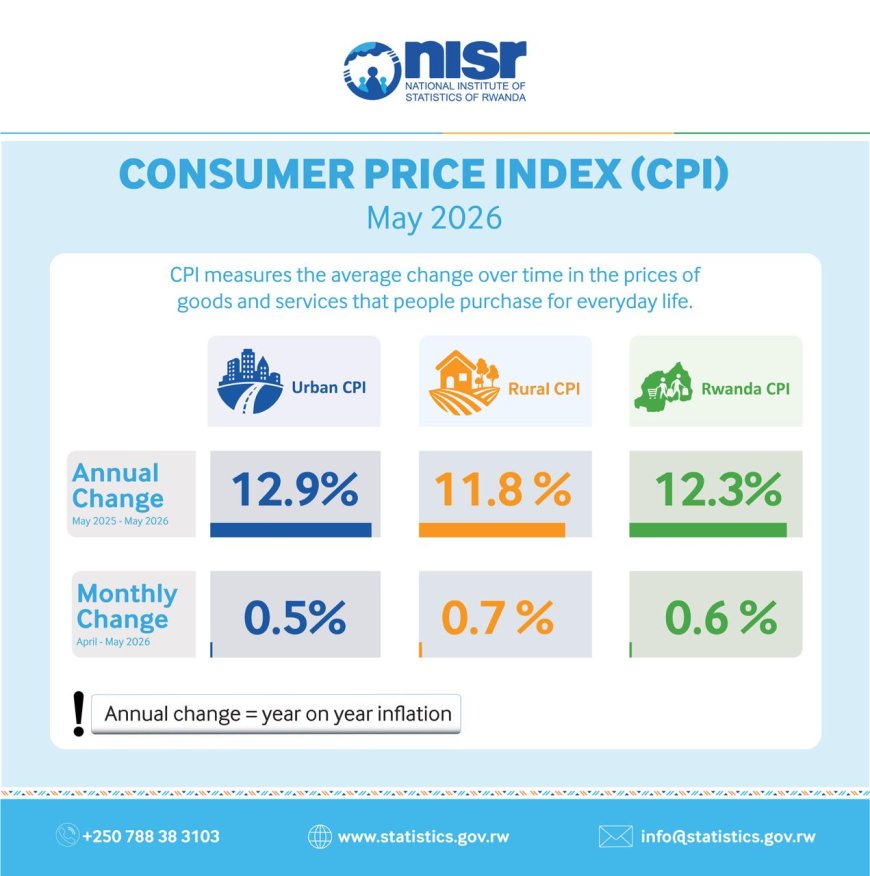
Rwanda’s cost of living pressures continued to weigh on consumers as the annual inflation rate climbed to 12.9% in May 2026 compared to the same month last year, according to the latest Consumer Price Index (CPI) report.
The double-digit figure highlights ongoing macroeconomic headwinds, with everyday essentials ranging from commuter costs to utility bills driving the bulk of the upward trajectory.
The Major Drivers of Rising Prices
The latest data reveals that household budgets are being stretched tightly across several critical sectors. Commuters and homeowners are bearing the heaviest burden:
Transport leading the surge:

Transport costs skyrocketed by 24.5%, making it the single largest contributor to the inflationary spike. Rising fuel prices and adjustments in public transit fares continue to ripple through the local economy.
Housing and Utilities:
The cost of housing, water, electricity, gas, and other fuels jumped by 19.4%, significantly increasing the baseline monthly overhead for families and businesses alike.
Hospitality and Leisure:
The hospitality sector saw notable price bumps, with restaurants and hotels recording a 16.6% increase.
Indulgence Goods:
Consumers also paid more for recreational and indulgence items, as alcoholic beverages, tobacco, and narcotics rose by 16.1%.
What This Means for the Economy
An inflation rate of 12.9% indicates that the central bank's monetary policy tools will remain under intense scrutiny in the coming months. While Rwanda's economy has shown robust post-pandemic resilience, supply chain bottlenecks and global commodity volatility are clearly reflecting in local market stalls and service fees.
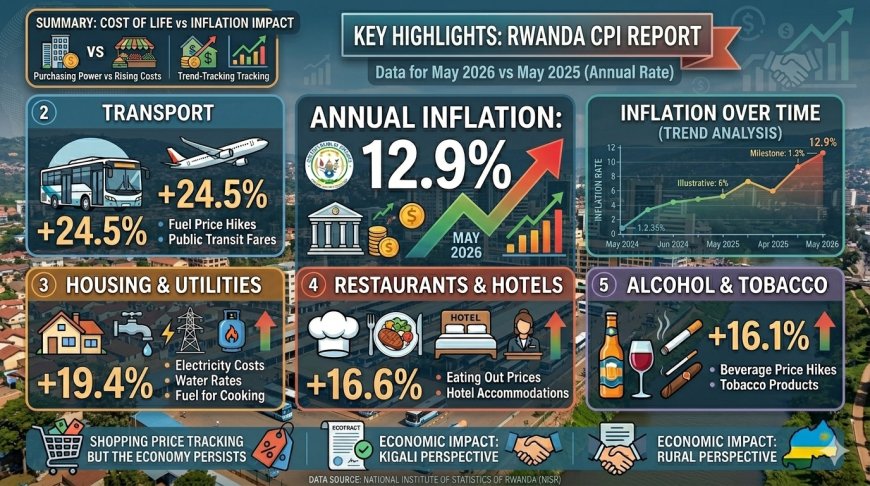
For the average citizen, the data confirms what is already felt on the ground: the purchasing power of the Rwandan Franc is facing its stiffest challenge in recent months, requiring strategic budgeting as basic living expenses refuse to cool down.