


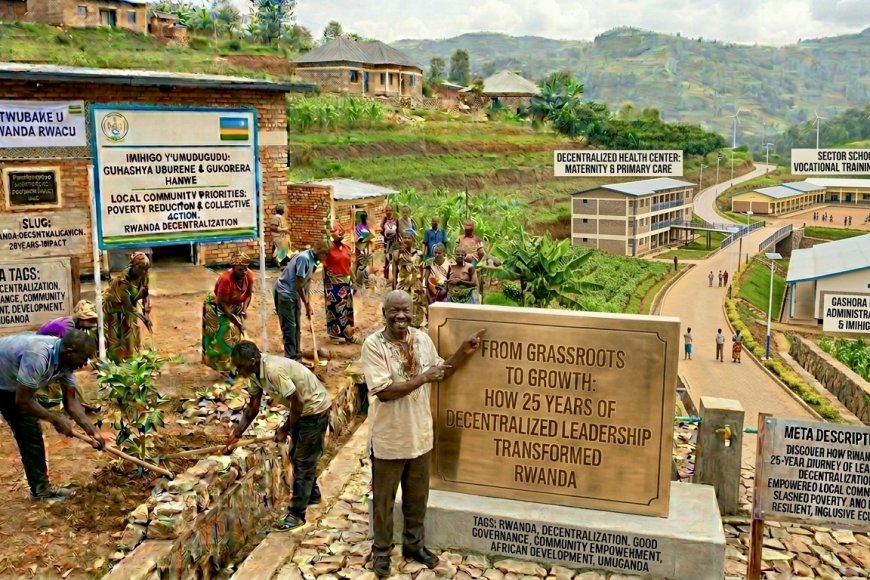
From Grassroots to Growth: How 25 Years of Decentralized Leadership Transformed Rwanda Slug: rwanda-25-years
Discover how Rwanda's 25-year journey of leadership decentralization empowered local communities, slashed poverty, and built a resilient, inclusive economy.
Over the past 25 years, Rwanda’s architectural shift from a highly centralized state to a decentralized governance model has been nothing short of revolutionary. Following the adoption of the National Decentralization Policy in 2000, the country embarked on an ambitious journey to transfer power, resources, and decision-making capabilities from the capital city of Kigali directly to local districts, sectors, and Imidugudu (villages). By bringing government closer to the people, the nation has unlocked unprecedented socio-economic progress and rewritten its developmental narrative.
At the heart of this transformation is genuine community empowerment. Citizen-led programs like Imihigo (performance contracts) have institutionalized a culture of local accountability and results-oriented leadership. Instead of relying on top-down mandates from distant offices, citizens are now the primary architects of their own development. They actively identify their most pressing local priorities—whether that means building a new healthcare wing, constructing feeder roads to connect marketplaces, or improving regional agricultural yields.
"Years ago, we waited for leaders in Kigali to notice our broken roads or lack of clean water," says local potato farmer Jean-Claude Nshimyumuremyi. "Now, during our weekly village meetings, we decide our own priorities. The budget follows our decisions, and we hold our local leaders directly accountable if promises are not kept."
This highly participatory approach ensures that public resources are directly aligned with real community needs, fostering a deep, enduring sense of local ownership. The socio-economic indicators across Rwanda’s districts speak volumes. Decentralization has streamlined public service delivery, dramatically reducing bureaucratic red tape and institutional delays. Access to universal healthcare (Mutuelles de Santé) and primary education has soared precisely because local leaders are on the ground, evaluated on their specific sectors' immediate success.
Furthermore, by legalizing and funding decentralized local structures, Rwanda has successfully integrated traditional, home-grown solutions into modern public administration. Collective initiatives like Umuganda (monthly community work) and Ubudehe (social categorization for community assistance) are no longer just cultural practices; they are foundational pillars of local governance.
"Decentralization brought the government straight to our doorstep," notes primary school teacher Alphonsine Mukamana. "When a new health post or classroom block is built right here in our neighborhood, we don't just use it—we guard it. We maintain it because we know it truly belongs to us, not to a distant ministry."
Ultimately, this governance revolution has bridged the historical gap between the state and its citizens. It ensures that Rwanda’s impressive economic growth is inclusive, reaching rural communities rather than remaining concentrated in urban centers. More than two decades since its inception, leadership decentralization stands as the bedrock of Rwanda’s stability and development, proving that the most sustainable way to build a resilient nation is from the ground up.
Tags: