

Why Louise Mushikiwabo is the Definitive Choice to Lead La Francophonie into the Future
Discover why Rwanda’s candidate, Louise Mushikiwabo, stands out in the 2026 OIF Secretary-General race. Read her powerful vision for a more influential, better-governed Francophonie.
The International Organisation of La Francophonie (OIF) stands at a defining crossroads. Representing a diverse global community of 93 member states and governments across five continents, the OIF has evolved far beyond its traditional roots. It is no longer just a linguistic framework; it has transitioned into a powerful diplomatic, cultural, and economic force. As the OIF prepares for the pivotal November 2026 Summit in Phnom Penh, Cambodia, the conversation surrounding its future leadership is more critical than ever.
At the center of this dialogue is the incumbent Secretary-General, Louise Mushikiwabo. Formally nominated by Rwanda to seek a new mandate, the seasoned diplomat’s campaign stands out as a call for steady, tested leadership during an era of profound global uncertainty.
Louise Mushikiwabo is the current Secretary-General of the OIF (Since 2019), She served as the Minister of Foreign Affairs & Cooperation of Rwanda (2009–2018) and her Key Pillar: is Economic Francophonie & Digital Transformation for Youth.
Navigating a Fragmented World
In late June 2026, the OIF made history by holding its first-ever public candidate hearings in Paris. This newly adopted framework, designed to instill greater transparency and meritocracy within the organization, provided the ultimate platform for candidates to present their visions. It was during this high-stakes audition that Mushikiwabo offered a sharp, realistic assessment of the geopolitical fragmentation facing the international community.
Addressing the extraordinary ministerial conference, she said she is ready and willing to keep serving the World Francophonie Community:
"I am very interested in continuing to serve you; I love what I do, and it is a good time for our organization. Which course am I talking about? Making the Francophonie a more influential, more supportive, better-governed space aligned with the challenges of its time, all this for the benefit of the well-being of its populations." She strongly stated
noted the volatility of contemporary international relations: "We are living through an unprecedented period where alliances and coalitions form and dissolve without anticipation and sometimes without comprehension from observers."
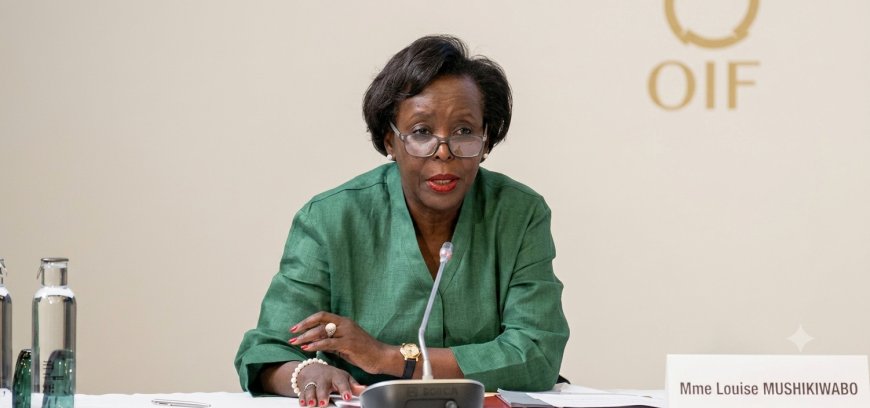
Ms. Louise Mushikiwabo, during her hearing as a candidate for the position of Secretary-General of the Francophonie.
Mushikiwabo’s background as Rwanda’s longest-serving foreign minister has uniquely equipped her to pilot the OIF through these very waters. Rather than isolating conflicting parties or leaning into rigid North-South divides, her style of diplomacy leans on continuous dialogue, horizontal solidarity, and turning the OIF into a reliable, active mediator in volatile regions.
The Course Ahead: Influence, Unity, and Governance
Mushikiwabo’s campaign is not merely built on defending her strong past record; it is explicitly focused on accelerating structural and programmatic reforms. During the Paris hearings, she made an impassioned plea to member states, outlining exactly what drives her bid for a consecutive term:"I am very interested in continuing to serve you; I love what I do, and it is a good time for our organization. Which course am I talking about? Making the Francophonie a more influential, more supportive, better-governed space aligned with the challenges of its time, all this for the benefit of the well-being of its populations."
This definitive "course" targets three primary operational goals:
-
Elevated Geopolitical Influence: Moving the OIF closer to major global decision-making entities—such as the United Nations and the African Union—ensuring the Francophone world speaks with a unified voice on pressing issues like climate change and security.
-
Economic & Technological Solidarity: Expanding the scope of "Economic Francophonie"—a paradigm she pioneered to link linguistic ties to real commercial trade, small business investments, and private financing. A primary emphasis of her new mandate involves heavily backing digital literacy and artificial intelligence training programs for young women and youth across the bloc.
-
Modernized Governance: Building upon her rigorous administrative cleanup since 2019. Under her watch, the OIF has systematically certified its accounts annually, consolidated scattered micro-programs into high-impact initiatives, and optimized institutional budgets to channel resources directly where they are needed most.
A Diverse Field: The 2026 Leadership Contest
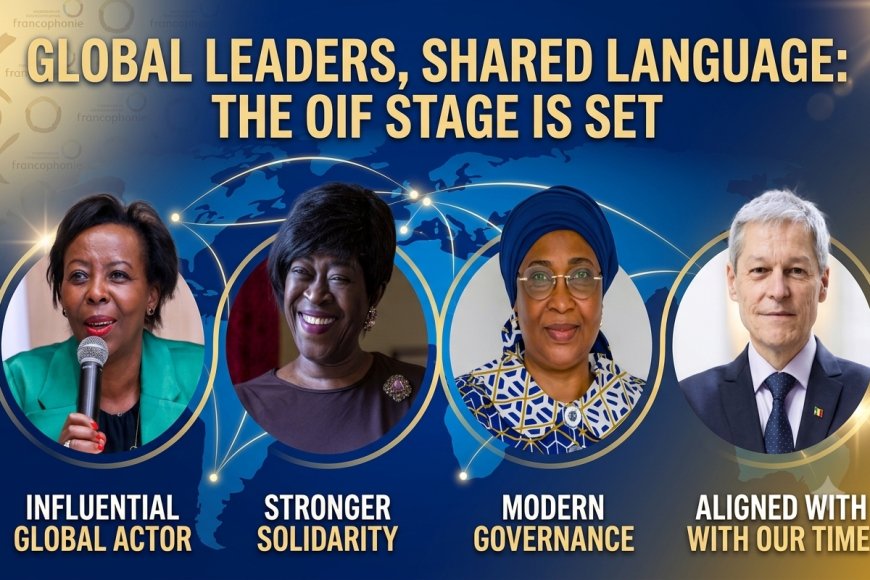
While Mushikiwabo's vision centers on deep structural continuity and expanding existing reforms, the 2026 race features a competitive and highly qualified slate of candidates. The new, transparent OIF rules required all candidates to face the same rigorous ministerial cross-examination in Paris, bringing alternative viewpoints to the table:
-
Juliana Amato Lumumba (Democratic Republic of Congo): A distinguished lawyer and diplomat, Lumumba brings immense historical and cultural weight to the race. The daughter of DRC’s independence icon Patrice Lumumba, she has previously served as the DRC's Minister of Education and Minister of Culture and Art, advocating for a deeply cultural and education-centered renaissance within the Francophone space.
-
Dr. Coumba Bâ (Mauritania): A veteran diplomat and a prominent voice for West African inclusion, Bâ has held a wide array of high-level portfolios in Mauritania, including Minister for Public Service, Minister for Youth and Sports, and Minister of African Affairs. Her platform emphasizes stronger regional integration and youth development across the Sahel.
-
Dacian Cioloș (Romania): Representing the OIF’s strong European constituency, Cioloș is a major political figure who served as the Prime Minister of Romania (2015–2017) and the European Commissioner for Agriculture and Rural Development, before transitioning into the European Parliament. He brings institutional weight from the European Union, focusing on sustainable development, agriculture, and modernizing institutional frameworks.
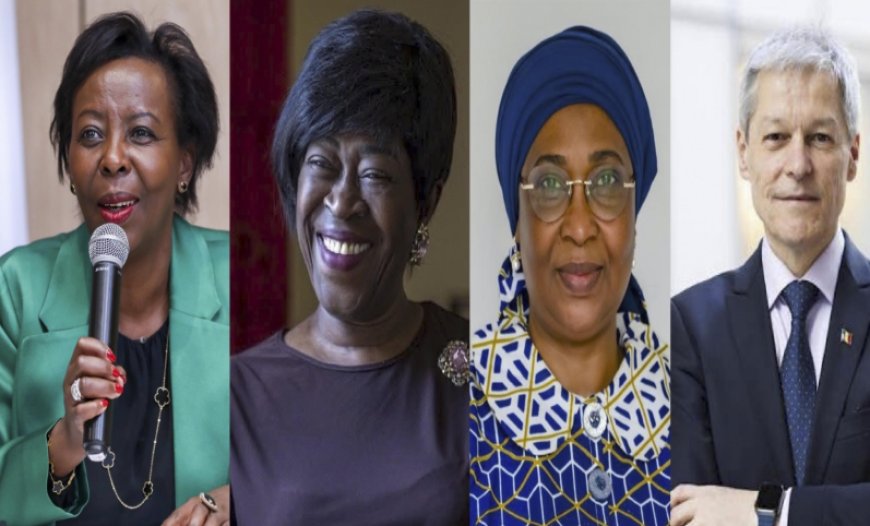
The four candidates to campaing for the OIF SG Elections
A Campaign Rooted in Proven Outcomes
The presence of strong contenders from Central Africa, West Africa, and Europe underscores the immense prestige and global relevance of the OIF today. However, diplomatic observers note that Mushikiwabo’s unique advantage lies in her unparalleled, practical command of the OIF's intricate machinery.
Under her steady stewardship, the OIF has successfully navigated the financial constraints of a volatile decade while scaling up development programs that directly prepared over 26,000 young people for the modern workforce between 2024 and 2026.
As the Francophone community turns its eyes toward Cambodia this November, the choice is clear. The OIF requires a leader who bridges differences, champions the economic potential of our shared language, and possesses the proven diplomatic weight to act effectively on the world stage. For an agile, unified, and modern Francophonie, Louise Mushikiwabo remains the steady hand ready to chart the course.