

Is the DRC Splitting? The Terrifying Reality of Balkanization in Eastern Congo
Is the Democratic Republic of the Congo about to fracture? Discover how the AFC/M23 coalition is building a parallel state in the East and the real probability of a permanent partition.
The Specter of Balkanization: Is the Eastern DRC About to Fracture?
For decades, the concept of Balkanization—the shattering of a sovereign nation into smaller, adversarial states has loomed over the Democratic Republic of the Congo (DRC) like a persistent shadow. Rooted in the historical collapse of the Ottoman Empire and the violent fracturing of Yugoslavia, the term captures the ultimate penalty of a weak central government: a country splitting along regional fault lines.
In the mineral-rich highlands of the eastern DRC, that theoretical threat is rapidly transforming into a structural reality.
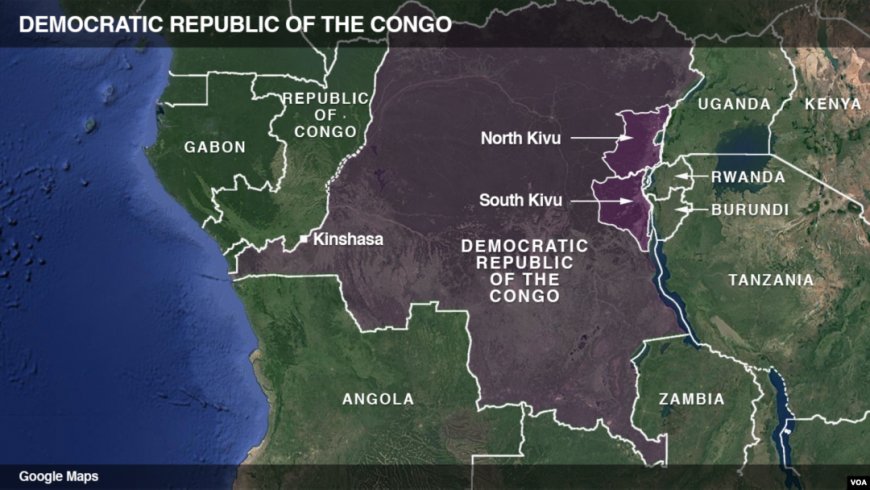
The Alliance Fleuve Congo (AFC) and its powerful military spearhead, the M23 movement, have done more than just destabilize North and South Kivu. By tightening their grip on strategic territories surrounding key hubs like Goma and Bukavu, the coalition has shifted from a traditional insurgency into an administrative force. They are no longer just fighting the state; they are actively replicating it.
Building a Parallel Architecture
The AFC/M23 strategy has evolved beyond hit-and-run tactics toward deep institutional entrenchment. To understand how close the region is to a true rupture, one only needs to look at the state-like machinery they have deployed:
- Rival Administrations: The AFC has appointed its own provincial governors to oversee the Kivus, directly challenging Kinshasa's authority.
- Alternative Legal Frameworks: They have established a specialized 25-member commission tasked with setting up independent courts and local tribunals.
- Fiscal Sovereignty: The coalition has institutionalized its own revenue collection, imposing a 15% tax on coltan extraction alongside fixed levies on cassiterite.
When an armed group stops merely disrupting public order and begins collecting taxes, enforcing laws, and regulating global supply chains, the boundary between a localized rebellion and a de facto partition begins to dissolve.
Assessing the Probability: A New State on the Horizon?
While the AFC/M23 alliance has successfully built the scaffolding of a separate territory, the likelihood of a officially recognized, independent state breaking away from the DRC remains low in diplomatic terms, but exceptionally high in day-to-day reality.
This paradox is driven by three conflicting forces:
1. The Brick Wall of International Law
The African Union has long maintained a strict doctrine regarding the permanence of colonial-era borders to prevent continental chaos. Global superpowers and regional bodies have zero appetite for recognizing a sovereign entity carved out of the DRC especially one widely condemned as a proxy for external interests. Without global recognition, a breakaway state would exist in a geopolitical vacuum, unable to sign legal trade treaties or access international banking.
2. Rhetoric vs. Local Sentiment
The AFC's own leadership, including figures like Corneille Nangaa, publicly rejects the secessionist label. Their stated ambition is not to slice the country apart, but to march across the continent to depose the government of President Felix Tshisekedi. Furthermore, the local population overwhelmingly rejects partition, viewing the coalition as a foreign occupation rather than a genuine domestic liberation movement.
3. The "Frozen Conflict" Reality
While the birth of a brand-new nation recognized by the United Nations is highly improbable, a permanent de facto partition is the most likely outcome. The central government in Kinshasa remains militarily overextended and politically distracted. Backed by disciplined logistics and strategic cross-border alliances, the AFC/M23 possesses the stamina to maintain its enclave indefinitely.
The Verdict: The world is unlikely to see a new flag planted in the eastern Congo anytime soon. However, if the current stalemate hardens, we will face the permanent reality of a ghost state—a vast, resource-rich territory that remains Congolese on world maps, but is functionally governed, taxed, and controlled by an entirely different master. Balkanization does not always need a formal declaration to exist; sometimes, it just needs a border that the central state is powerless to reclaim.
Tags: